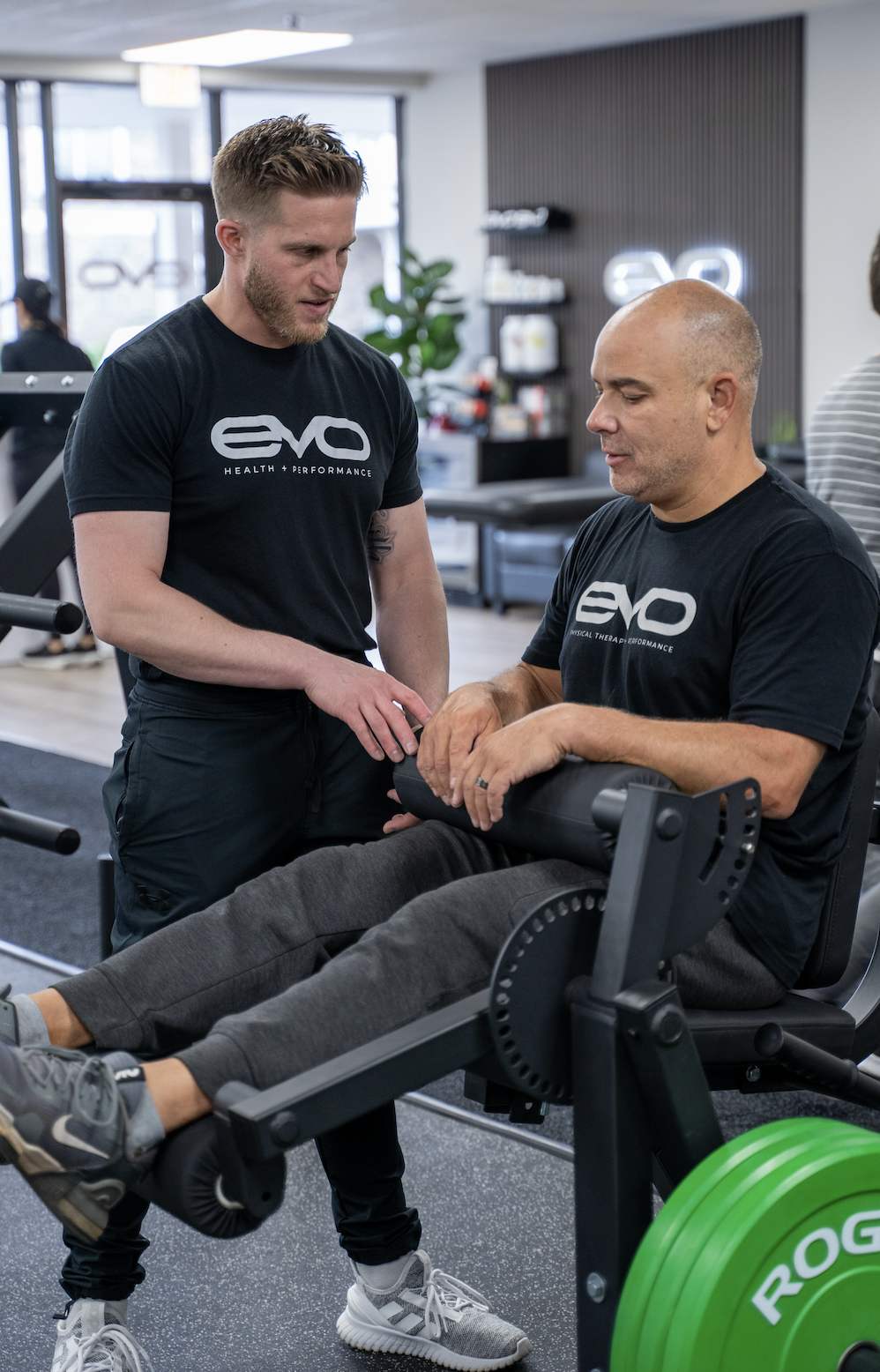
An ACL injury can feel like a major setback, not just for athletes but for anyone who enjoys an active lifestyle. The road to recovery is often filled with conflicting advice and outdated beliefs, which makes it difficult to know what to expect and how to best support your healing.
At EVO Health + Performance, we believe a successful recovery starts with accurate information. Our team of physical therapists in Freehold, NJ is here to clear up the confusion. Below, we debunk the most common myths about ACL recovery with evidence-based insights, so you can get back to doing what you love — stronger than before.
- Surgery isn’t the only option for an ACL tear; many individuals can achieve full function through structured physical therapy alone.
- The ACL rehab process is complex and highly individualized. There’s no one-size-fits-all timeline, and rushing back to activity can increase the risk of reinjury.
- A successful recovery involves more than strengthening the knee — it requires addressing psychological readiness, hip and core stability, and sport-specific movement.
Myth 1: Surgery is always necessary after an ACL tear
This is one of the most pervasive myths surrounding ACL injuries. While surgery is often recommended — especially for elite athletes or those with multiple ligament injuries — it is not always the only path to recovery. Research shows that a significant number of individuals, known as “copers,” can return to their desired activity levels with structured physical therapy alone.
A 2010 study published in the New England Journal of Medicine found that a strategy of early rehabilitation followed by optional, delayed surgery was no worse than early surgery followed by rehabilitation. For many people, a non-surgical approach can yield excellent results.
The decision to have surgery should be a collaborative one between you, your orthopedic surgeon, and your physical therapist. Age, activity level, knee stability, and personal goals all play a role. A dedicated Freehold physical therapist can help you explore your options and create a plan tailored to your needs — surgical or not.
Myth 2: Recovery takes exactly 9 months
The nine-month timeline is often cited as the standard for returning to sport after ACL surgery, but this is a major oversimplification. Every person and every injury is unique. Recovery is a criteria-based process, not a time-based one. Progression should be based on achieving specific strength, balance, and functional milestones — not on how many months have passed.
Rushing back before your body is ready is one of the biggest risk factors for a second ACL tear. A successful ACL rehab in Freehold, NJ focuses on meeting these key criteria:
- Restoring full range of motion: achieving symmetrical movement in your injured knee compared to your uninjured one.
- Building quadriceps strength: your quad strength should be at least 90–95% of your uninjured leg.
- Passing functional tests: demonstrating proficiency in hopping, jumping, and cutting movements without pain or instability.
- Psychological readiness: feeling mentally confident and ready to return to your sport without fear.
Myth 3: Rehab is all about strengthening the knee
While strengthening the knee — particularly the quadriceps and hamstrings — is a cornerstone of ACL rehab, it’s only one piece of the puzzle. A truly effective program takes a holistic approach, addressing the entire kinetic chain: your hips, core, and ankles all play a crucial role in supporting your knee.
A skilled physical therapist will incorporate exercises that improve:
- Hip and glute strength: strong hips provide stability and control movement at the knee joint.
- Core stability: a strong core acts as a foundation, allowing safer, more efficient limb movement.
- Neuromuscular control: retraining your brain and muscles to work together and react to unexpected situations.
- Movement quality: correcting faulty patterns (like the knee caving inward) that may have contributed to the injury in the first place.
Myth 4: Once you’re cleared, you’re done with rehab
Getting cleared to return to sport is a huge milestone, but it doesn’t mean the journey is over. The period immediately following your return is a high-risk time for reinjury. Continuing with a maintenance program is essential for long-term success. This “fourth phase” of rehab often includes:
- Ongoing strength training to keep building and maintaining leg and core strength.
- Plyometrics and agility drills to keep sport-specific movements sharp.
- Load management — gradually increasing training volume and intensity to avoid overloading the knee.
Think of it as an ongoing commitment to your physical health. Just as you wouldn’t stop brushing your teeth once a cavity is filled, you shouldn’t abandon your strengthening program once you’re back on the field.
Bring your questions to a free 15-minute call. We’ll tell you what applies to your situation — honestly, including whether you even need us.
Book a Free Discovery Call →Navigating ACL rehab can be challenging, but you don’t have to do it alone. Understanding the facts and working with a knowledgeable team makes all the difference. If you’re looking for guidance with your ACL rehab, contact us to schedule an evaluation and take the first step toward a confident, successful return to the activities you love.